Vol 10, No 1 (2026)
https://doi.org/10.7577/njcie.6405
Understanding Policy Overload in Sub-Saharan African Education Reforms: A Critical Theoretical Analysis of Implementation Complexity and Street-Level Bureaucracy
John Issahaku
Drexel University
Email: jsi37@drexel.edu
Kristy Kelly
Columbia University
Email: kk2772@columbia.edu
Abstract
This article presents a systematic critical literature review examining how policy overload and related concepts such as policy accumulation, layering, and administrative burden are defined, applied, and studied in Sub-Saharan African education research. Drawing on thematic synthesis, the review analyzes forty peer-reviewed studies published between 2000 and 2025. The analysis identifies three central patterns: fragmented conceptualization of policy overload, predominantly qualitative and descriptive empirical approaches, and limited integration of street-level bureaucracy and policy implementation complexity perspectives. The findings show that policy overload in African education systems is most often treated as an implicit condition rather than an explicit analytical construct, with reforms accumulating faster than institutional capacity to implement them. The review highlights key research gaps, including the absence of a shared conceptual vocabulary, limited longitudinal and comparative designs, and insufficient theorization of agency in mediating overload. The article concludes by proposing an interpretive framework that conceptualizes policy overload as both a structural governance condition and a lived implementation experience, offering directions for future theory-building and empirical research.
Keywords: policy overload, education reform, Sub-Saharan Africa, street-level bureaucracy, policy complexity
Introduction
Policy overload (Knill et al., 2020), also referred to as policy layering, policy accumulation, or bureaucratic overload, is an emerging concern in public administration and educational governance. It describes the process of piling new policies, reforms, and regulations on top of existing ones, rather than replacing or revising them. The result overburdens institutions and stakeholders, thereby reducing policy coherence and performance. Governments continue to adopt new rules and policies at a pace that outstrips the elimination of outdated ones, contributing to an expansion of policy stocks (Fernández-i-Marín et al., 2024). The result leads to implementation burdens disproportionately impacting “street-level bureaucrats,” including teachers, principals, and other school staff who are responsible for translating policy into practice (Chang & Brewer, 2022). Increasing the complexity and volume of policies presents significant challenges for these individuals, hindering their ability to implement educational initiatives effectively, and ultimately affects student outcomes.
While policy overload as a concept is commonly utilized in political science and administrative science research (Knill et al., 2024; Zink et al., 2024), it is rarely applied to education contexts. This review synthesizes and critically analyzes how the concept of policy overload, including related constructs such as policy accumulation, layering, and administrative burden, has been defined, applied, and methodologically examined within Sub-Saharan African (SSA) education research. The study aims to identify how policy overload has been framed, studied and reported in Sub-Saharan Africa (SSA) by synthesizing perspectives from both political science and education policy research. Through this analysis, the review contributes to the theoretical refinement of overload as an analytical construct and identifies directions for future research on the complexity of education reform in Africa.
Accordingly, the review is guided by four interrelated research questions:
RQ1. How is the concept of policy overload—including related terms such as policy accumulation and bureaucratic burden—defined, framed, and theorized in studies on education policy implementation in SSA?
RQ2. In what ways has the concept of policy overload been applied or observed in empirical studies of education reform in SSA?
RQ3. What research designs and methodological approaches have been employed to examine policy overload or its correlates in SSA education systems?
RQ4. What cross-cutting or emergent themes arise from the synthesis of conceptual, empirical, and methodological findings of policy overload, and what research gaps, theoretical limitations, and opportunities for future inquiry exist?
These questions collectively form a systematic critical literature review that synthesizes existing knowledge and creates a cohesive framework for comprehending how policy accumulation transforms implementation practices and governance capacity within African education systems.
Theoretical Framework
This review adopts a critical stance, grounded in Street-Level Bureaucracy theory (Lipsky, 1980) and policy implementation complexity frameworks (Honig, 2006). It examines how the accumulation of educational policies is defined, framed, theorized, discussed, or applied in education reforms across SSA, and how such discourse creates implementation tensions at the organizational level. These frameworks provide the foundation to analyze the often-overlooked power dynamics between policy creators and implementers, challenging the assumption that implementation failures stem primarily from resistance or incompetence rather than structural overload.
To explore these dynamics, we utilize Street-Level Bureaucracy theory (SLB), as pioneered by Lipsky (1980), to understand how street-level bureaucrats make policy through their everyday interactions with citizens. Street-level bureaucrats in Lipsky’s construction include teachers, educational administrators, school librarians, and others who wield significant discretion in interpreting and implementing policies at the local level (Chang & Brewer, 2022). Due to factors such as limited resources and high workloads, they develop coping mechanisms and decision-making shortcuts in response to ambiguous policy mandates, which ultimately influence policy outcomes. In this way, they are, in effect, policymakers (Maynard-Moody & Musheno, 2000). However, their discretion, while necessary for navigating complex situations, can also lead to disparities in service delivery and unintended consequences (Hoyle, 2014). SLB theory acknowledges that the realities of frontline work often diverge significantly from the intentions of policy designers.
While SLB theory emphasizes the discretionary power and coping mechanisms of frontline actors, it is complemented by a broader recognition of the non-linear, multi-level nature of policy enactment provided by the complexity framework for policy implementation. This framework acknowledges that the process of implementing policies, especially in education, is rarely linear or straightforward (Honig, 2006). These frameworks emphasize the interplay of multiple actors, levels, and factors that influence the translation of policy goals into tangible outcomes. A key theme is that implementation is not simply a technical or managerial task, but a political and social process, shaped by power dynamics, competing interests, and diverse values. We therefore also draw on Honig’s (2006) framework for understanding the complexity of policy implementation, which includes multiple actors and levels, contextual factors, feedback loops, and adaptation, to examine policy actors’ work at different levels of the system, from national governments to local communities, and their interactions with each other can significantly impact implementation outcomes (Viennet & Pont, 2017). As such, it is important to recognize that policies are best implemented through a complex network of organizations and target populations, who can inform adjustments to policy design and implementation strategies, leading to improved outcomes over time (Meier, 2003).
Method
This review employed a systematic critical literature review design grounded in thematic synthesis (Thomas & Harden, 2008). Thematic synthesis was selected because it allows the integration of diverse qualitative and conceptual findings while moving beyond summary toward interpretation. It is particularly suitable for examining complex, multi-level policy phenomena such as overload, where meaning must be constructed across theoretical and empirical boundaries. The approach was guided by the RETREAT framework (Booth et al., 2016), which recommends aligning the synthesis method with the nature of the research question, epistemological stance, expertise, and available data. In this study, the questions were interpretive and theory-building rather than aggregative, and the data comprised heterogeneous texts: peer-reviewed conceptual essays, policy analyses, and empirical studies. Thematic synthesis, therefore, offered an appropriate balance between systematic procedure and interpretive depth.
The analytical process drew on three complementary traditions. First, following Thomas and Harden’s three stages, we conducted line-by-line coding of the findings and discussion sections of each study, organized the codes into descriptive categories, and then generated higher-order analytical themes. Second, we adapted Lauer et al.’s (2005) research-synthesis cycle, which emphasizes iterative movement between data extraction, interpretation, and theory generation. Third, we followed established guidance on maintaining consistent inclusion criteria and transparent coding rules to enhance the reliability and traceability of theme development (Gough et al., 2017). Collectively, these frameworks ensured conceptual rigor and traceability while allowing flexibility to interpret how the idea of policy overload is theorized and applied across different disciplinary traditions.
The search strategy followed the RETREAT principle of matching search breadth to data heterogeneity. Two tiers of search were conducted between July 2025 and August 2025 using Scopus and Google Scholar. The first tier targeted the conceptual vocabulary of overload in governance research through the Boolean combination (“policy overload” OR “policy accumulation” OR “policy layering” OR “reform fatigue” OR “implementation burden”) AND (“Sub-Saharan Africa” OR “Ghana”). Ghana served as an anchor case because of its extensive documentation of education reforms and its centrality in the African policy-implementation literature. During the iterative process, relevant comparative studies from Ethiopia and Uganda were identified through reference chaining and citation tracking. The second search narrowed the focus on education policy-specific literature by utilizing terms such as "bureaucratic overload," "administrative burden," "policy incoherence," and "education policy." This two-phase approach enabled conceptual saturation across political science and education domains rather than an exhaustive enumeration of sources. The search was limited to peer-reviewed articles and scholarly books in English published between 2000 and 2025.
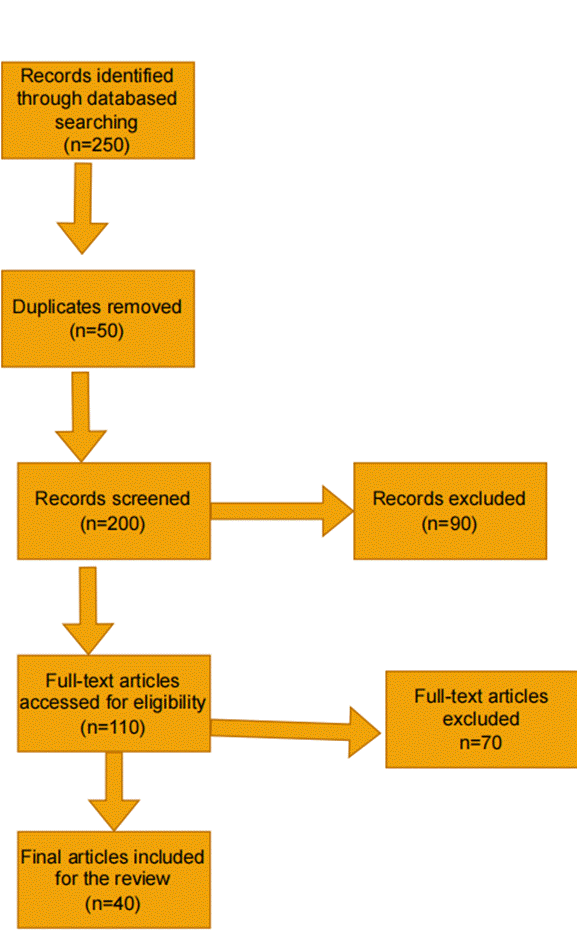
All retrieved items (N = 250) were imported into Zotero for evaluation. Abstracts were first reviewed to eliminate irrelevant sources, followed by full-text reading for all remaining studies in accordance with the PRISMA four-phase process. Inclusion criteria required that each study (a) addressed at least one research question, (b) examined education policy in Sub-Saharan Africa, (c) engaged conceptually or empirically with overload-related constructs, and (d) demonstrated methodological or theoretical relevance. Excluded were works that addressed non-educational sectors, exhibited insufficient conceptual depth, or concentrated solely on non-African contexts devoid of transferable insights. After screening and evaluating quality, forty studies were selected, ensuring a balance across conceptual, empirical, and methodological domains to guarantee depth and representativeness. The article selection process is illustrated in Appendix A. All included studies are listed in Appendix B.
The corpus of forty studies reflected three analytical directions consistent with the aims of the review. About one-third were conceptual or theoretical, advancing definitions and framings of policy overload, accumulation, and bureaucratic burden. Another third was empirical, drawing on national and comparative studies of education reform in Ghana, Ethiopia, Uganda, and related Sub-Saharan African contexts. The remaining group focused on methodological or analytical contributions, illustrating how scholars operationalize complexity and overload in policy studies. This distribution ensured conceptual depth, contextual diversity, and methodological insight. Table 1 presents a descriptive overview of the studies included in the review, highlighting their direction, geographic scope, and methodological orientation.
Table 1. Descriptive Overview of Studies Included
|
Author(s) / Year |
Country / Region |
Type of Study |
Analytical Direction |
Key Focus / Contribution |
|
Adam, Knill & Steinebach (2019) |
OECD / Europe |
Comparative Policy Study |
Methodological |
Traces the evolution of policy accumulation and overload measurement frameworks. |
|
Kwarteng & Ahwireng-Obeng (2023) |
Ghana |
Empirical Case Study |
Empirical |
Examines how reform layering produces implementation paralysis in education systems. |
|
Zink et al. (2024) |
Cross-national (SSA) |
Conceptual / Theoretical |
Conceptual |
Integrates Street-Level Bureaucracy theory with complexity approaches to governance. |
|
Fernández-i-Marín et al. (2025) |
Sub-Saharan Africa |
Mixed-Methods |
Methodological |
Proposes analytical tools for studying bureaucratic burden in education policy implementation. |
|
Akyeampong (2020) |
Ghana |
Qualitative Case Study |
Empirical |
Explores teacher discretion and moral reasoning in overloaded reform contexts. |
|
Woldegiorgis (2018) |
Ethiopia |
Policy Analysis |
Conceptual |
Analyzes policy incoherence and reform fatigue in higher education governance. |
|
Nudzor (2014) |
Ghana |
Documentary Review |
Conceptual |
Interprets education reform proliferation as a symptom of policy layering. |
|
Tikly & Barrett (2013) |
Sub-Saharan Africa (Regional) |
Theoretical Framework Paper |
Conceptual |
Proposes models for interpreting education reform complexity in postcolonial systems. |
|
Sifuna (2022) |
Kenya |
Comparative Policy Review |
Empirical |
Investigates institutional burden and policy sequencing challenges in curriculum reforms. |
|
Ampofo et al. (2021) |
Ghana |
Case Study |
Empirical |
Examines administrative overload and teacher response in decentralized education systems. |
A comparative matrix was used to summarize the data from each study. It included the author, year, context, design, theoretical orientation, and main contribution. The coding process combined inductive and deductive reasoning (Fereday & Muir-Cochrane, 2006). Descriptive codes such as "reform layering," "initiative fatigue," and "bureaucratic discretion" were gradually consolidated into thematic clusters that reflected recurring meanings across contexts. Twelve initial categories were collapsed into four meta-themes aligned with the research questions: definitional and conceptual framing, empirical manifestations of overload, methodological orientations, and cross-cutting emergent insights. These descriptive themes served as the foundation for a deeper analytical stage in which we reinterpreted the data through street-level bureaucracy and policy implementation complexity theories.
Table 2 presents the analytical coding framework that guided the synthesis of findings. It integrates both the descriptive categories derived from the initial coding cycle and the higher-order analytical themes developed through interpretive triangulation using Street-Level Bureaucracy and Policy Implementation Complexity theories.
Table 2. Analytical Framework and Theme Development
|
Phase of Synthesis |
Example Codes / Illustrative Phrases |
Descriptive Category |
Analytical (Meta-)Theme |
Interpretive Insight |
|
Line-by-line coding of findings and discussions |
“initiative fatigue,” “policy layering,” “duplication of reforms,” “reporting overload,” “fragmented accountability” |
Organizational Saturation |
Policy Accumulation as Governance Culture |
Repeated layering of reforms signals a governance style that equates policy proliferation with performance. |
|
Grouping of related codes into descriptive themes |
“multiple directives,” “ambiguous mandates,” “teacher discretion,” “compliance coping” |
Street-Level Discretion |
Discretion as Survival Strategy |
Front-line actors reinterpret or triage mandates to manage reform congestion. |
|
Cross-study comparison and category refinement |
“unfunded reforms,” “data fatigue,” “resource mismatch,” “coordination failure” |
Institutional Constraints |
Institutional Congestion and Reform Fatigue |
Structural under-resourcing converts reform ambition into chronic overload. |
|
Generation of analytical themes (abductive reasoning) |
“moral dilemmas,” “professional responsibility,” “negotiating contradictions” |
Ethical Reasoning in Implementation |
Moral Mediation of Overload |
Practitioners frame overload as an ethical issue—balancing compliance with pedagogical values. |
This stage corresponded to what Thomas and Harden (2008) describe as “going beyond the primary studies,” translating the evidence into new theoretical propositions about overload as both a governance condition and an interpretive practice.
Quality appraisal drew on criteria proposed by Harden et al. (2004) and Spencer et al. (2003), emphasizing methodological transparency, interpretive richness, and contextual fidelity rather than hierarchical judgments of rigor. Instead of excluding studies, we used sensitivity analysis to test whether lower-quality studies altered thematic patterns; none did substantively. Reflexive memos were kept throughout the process to record interpretive decisions, moments of uncertainty, and theoretical shifts. This reflexivity ensured transparency in how descriptive findings were elevated to analytical constructs and guarded against overgeneralization.
The synthesis did not need ethical approval because it was based only on published research. However, in line with Thomas and Harden’s (2008) emphasis on preserving meaning through translation across studies, the synthesis treated each text as both evidence and argument by acknowledging that knowledge of policy overload is historically and politically situated.
Overall, the methodological approach integrates the rigor of systematic review with the interpretive depth of qualitative synthesis. By combining the procedural clarity of Thomas and Harden (2008) with the adaptive logic of Lauer et al. (2005), Martin et al. (2018), and Booth et al. (2016), this study constructs a transparent and theoretically relevant framework for analyzing how the concept of policy overload as has been defined, applied, and studied in Sub-Saharan African education research. The findings are described in the next section, followed by discussion of their relevance to the field and connection the research questions.
Results
We identified four main analytical themes: definitions and conceptual framing of policy overload; empirical applications of policy overload in SSA education reform; methodological approaches and theoretical gaps; and overload in crisis contexts. We describe each below.
Theme 1: Definitions and Conceptual Framing of Policy Overload
Findings reveal that policy overload is inconsistently defined, yet its presence is implicit in discussions around reform fatigue, policy layering, and institutional strain. Scholars such as Adam, Steinebach, and Knill (2018) and Molla (2019) describe how the accumulation of multiple, often contradictory policies leads to confusion and exhaustion among implementers. However, while some works (e.g., Fernández-i-Marín et al., 2024) clarify specific terms like administrative burden and regulatory congestion, few offer an operational definition of policy overload tailored to the unique challenges of SSA contexts. This lack of definitional coherence presents significant challenges for measuring and addressing overload empirically in SSA education systems.
The consequences of this definitional inconsistency are far-reaching. Without a clear and consistent definition, it becomes difficult for policymakers to identify the scope of policy overload and develop effective solutions. As a result, educational administrators and teachers are left without a concrete understanding of the overloads they face, making it harder to address the root causes or design effective interventions. For example, when policies are not explicitly defined or adapted to local realities, their implementation is often disconnected from the contexts in which they are applied. Giacomazzi, Fontana, and Trujillo (2022) critique the dominance of Western theoretical frameworks in SSA educational policy, arguing that these frameworks create a disconnect between policy expectations and local realities. This disconnect further contributes to the overload experienced by street-level bureaucrats, who are tasked with adapting foreign policies to their local environments, often without the support or resources necessary for effective adaptation.
Furthermore, the way overload is framed shapes both the public discourse around policy and its eventual outcomes. When policy overload is seen as a result of fragmented and opaque political processes, as argued by Hinterleitner et al. (2023), overload is not a natural outcome of rational policy planning, but rather a symptom of broader governance challenges, such as clientelism and institutional fragmentation. This framing has direct consequences for how policy is crafted and implemented. It implies that to reduce overload, efforts must go beyond merely streamlining policies or improving administrative capacity; they must also address the underlying political and governance structures that contribute to policy fragmentation and inefficiency. Coban (2023) further supports this notion by asserting that policy accumulation is not a result of rational planning but rather a reflection of clientelist governance and institutional fragmentation, which erode administrative capacity.
In summary, the lack of clarity and coherence in how policy overload is defined and framed in the literature has serious consequences for education reform in SSA. It impedes both the understanding of overload and the development of strategies to mitigate its effects. This highlights the need for a more context-specific, coherent definition of policy overload that accounts for local realities, administrative capacities, and political dynamics in order to design more effective and sustainable education reforms.
Theme 2: Empirical Applications of Policy Overload in SSA Education Reform
Empirical studies from Ghana, Ethiopia, and Uganda provide vivid illustrations of how policy overload manifests in practice. While many articles do not use the term directly, they document the symptoms: fragmented reforms, conflicting directives, poor teacher preparation, and reform fatigue (Asare & Nti, 2014). Tagoe (2014), Anthony-Bebli (2021), and Mahama and Koomson (2020) report overlapping donor and national policies, often introduced without adequate field consultation or capacity building. This confirms how street-level implementers adapt policies in ways that reflect local constraints, sometimes resulting in uneven implementation.
Findings also reveal how overload is both a structural condition and an experiential reality, shaped by power asymmetries, donor influence, and national political cycles. Across the studies, teacher demotivation, curricular incoherence, and symbolic compliance are prevalent. For instance, Anthony-Bebli (2021) critiques the unrealistic timelines of special needs integration in Ghana’s education reforms. Actor responses range from improvisation and selective implementation to outright resistance.
In addition, the literature reveals the prevalence of reforms that are implemented to meet donor requirements or international standards but lack real commitment or implementation infrastructure. For example, Molla (2019) critiques the World Bank's influence in Ethiopia as contributing to symbolic overload—performative reforms rather than substantive ones. Likewise, Tagoe (2014) and Kuyini (2013) show how externally driven initiatives often bypass local contextual realities, contributing to misalignment and superficial adoption. This theme reflects the core tenets of Policy Implementation Complexity, where reforms accumulate without harmonization.
Findings underscore the critical need for more context-sensitive and locally driven education reforms. When policies are imposed without adequate consultation or attention to local capacities, they not only increase administrative burdens but also perpetuate inequities in educational access and quality. The resulting mismatch between policy intent and implementation can undermine educational outcomes, reinforcing a cycle of ineffective reforms and teacher burnout. Additionally, the persistent misalignment between external donor expectations and local educational realities calls for a more balanced approach that integrates local input and capacity-building efforts to ensure that reforms are not just symbolic but genuinely transformative.
Theme 3: Methodological Approaches and Theoretical Gaps
The findings point to a predominance of qualitative case study designs. Across most studies, especially those based in Ghana (e.g., Adu-Gymafi & Otami, 2020; Adu-Gyamfi et al., 2016; Tanye, 2017; Tikly, 2011), qualitative case studies were the dominant design. These enabled detailed, context-rich explorations of how education reforms are experienced, adapted, or resisted in practice, particularly when examining the lived realities of policy overload and fragmentation. Findings revealed that the continuous layering of reforms without adequate resourcing leads to implementation paralysis (Adu-Gymafi & Otami, 2020). This suggests that African policy research favors depth over generalizability, revealing systemic and cultural misalignment in top-down reform efforts.
Document analysis and discourse-centered methods dominate in the methods sections for analyzing data. Many articles relied on policy document reviews, curriculum texts, and government strategy papers, using critical discourse analysis (e.g., Nyamekye et al., 2024; Tanye, 2017; Tikly, 2011) and thematic content analysis (e.g., Adu-Gyamfi et al., 2016). This trend reflects a scholarly attempt to decode how policy overload is embedded in reform language, donor rhetoric, and bureaucratic expectations. The literature revealed a “continuing tension between internationally defined indicators and the cultural relevancy of adult education in Ghana” (Tanye, 2017, p. 208). This finding implies that research methodologies are often discursively oriented to challenge colonial, neoliberal, or technocratic policy frameworks.
The data also produced a notable pattern of scholars using theoretical pluralism and hybrid frameworks to theorize or conceptualize their studies, including policy transfer theory, postcolonial theory, critical pedagogy, policy accumulation theory, sense-making, and the education policy cycle. This theoretical hybridity supports nuanced interpretations of overload, especially where reforms are externally imposed. In the case of Ghana, “teachers are caught between curriculum expectations and their desire to create culturally resonant learning” (Nyamekye et al., 2024, p. 15). The implication is that scholars integrate global and local theories to interrogate both macro-political dynamics and micro-level consequences of policy accumulation.
Surprisingly, the data revealed a limited use of longitudinal or mixed-methods approaches to understand policy overload and its consequences. Only the OECD-based studies (e.g., Adam et al., 2018) in the European context employed longitudinal or mixed-methods designs, such as regression modeling and comparative institutional analysis. African-based studies rarely used such techniques—likely due to data constraints, limited funding, or different epistemological orientations. These findings suggest a need to diversify methodologies in African education policy research by building data infrastructure for larger-scale or mixed-methods studies.
Moreover, the data points to scholars in the SSA context leaning more towards an institutional and capacity-based focus in local studies. In contrast to Western literature's focus on systemic policy growth, the African literature centered on institutional capacity, implementation gaps, and teacher/practitioner experiences (e.g., Adu-Gyamfi et al., 2016; Tikly, 2011). These studies frame overload not just as quantity of policy but as qualitative misfit. Ekanayake et al. (2021) argue that “the current reform suffers from policy overload and a lack of coordination among the implementing bodies” (p. 7), leading to fragmentation. These findings imply that, unlike European or North American scholars, African scholars expand the definition of policy overload to include misalignment, neglect of local agency, and fractured governance.
Finally, the predominance of qualitative approaches, particularly case studies, discourse analyses, and policy ethnographies are valuable for contextual depth, the field lacks comparative and longitudinal studies capable of capturing the systemic nature of policy accumulation over time. Only a few works (e.g., Zink et al., 2024; Fernández-i-Marín et al., 2025) attempt to integrate SLB or complexity frameworks systematically. This methodological gap limits the ability to generalize findings or test theory-driven hypotheses.
In conclusion, drawing from SLB theory, multiple studies underscore the critical role of street-level actors in adapting, translating, or even ignoring reforms. Boakye and Béland (2022) describe policy translation as bricolage, where teachers and administrators improvise implementation strategies to fit local realities. Similarly, Anthony-Bebli (2021) and Rosekrans et al. (2012) illustrate how discretion functions as a coping mechanism in the face of institutional overload. This street-level agency introduces heterogeneity in reform outcomes but also helps sustain system functionality under strain.
Theme 4: Overload in Crisis Contexts
Findings (e.g., Mahlatji et al., 2023; Wang, 2021) revealed that reform overload is more prevalent in in crisis or transitional settings, such as during COVID-19 or rapid reform scale-up. These environments exacerbate the effects of overload and reveal its long-term implications for teacher well-being, student outcomes, and institutional resilience. Closely tied to policy layering, institutional burden manifests as fatigue among implementers and reduced system responsiveness. Studies (e.g., Knill et al., 2020; Nudzor, 2017) describe how the accumulation of mandates leads to compliance overload and superficial engagement with reforms. Teachers report diminished motivation and cognitive overload, which can undermine both reform quality and equity. This thematic synthesis provides a nuanced understanding of how policy overload is framed, experienced, and studied in Sub-Saharan Africa. Each theme not only maps onto the research questions but also reflects the complex interplay of global pressures, local agency, and institutional limitations that shape the reform landscape.
Coupled with overload in a crisis context is the revelation of fragmentation, role conflict, and accountability gaps from the data. The literature documents significant organizational fragmentation within education systems due to overlapping mandates and unclear reform sequencing. Studies from Ghana (e.g., Nmai, 2020; Tagoe, 2014) reveal role conflicts between central agencies and local actors, which impede coordination. This disjointed reform environment leads to accountability dilemmas, with unclear lines of responsibility and uneven implementation fidelity.
Discussion
This section interprets the synthesized findings through the dual lenses of Street-Level Bureaucracy (SLB) and Policy Implementation Complexity, addressing each research question in turn. Together, the discussion extends to an emergent fourth question (RQ4), which integrates conceptual, empirical, and methodological insights to reveal broader implications for theory and practice.
RQ1: Definitional and Theoretical Framing of Policy Overload
The review confirms that the concept of policy overload remains both visible and invisible in Sub-Saharan African education scholarship—visible through recurring metaphors of fragmentation, policy layering, and reform fatigue, yet invisible in its lack of theoretical coherence. Scholars such as Adam, Steinebach, and Knill have offered robust conceptualizations of overload in political science, but their analytical precision rarely travels into education policy domains. Within the SSA context, authors like Molla (2019) describes the same condition under the labels of symbolic overload or policy incoherence. What emerges is a dispersed conceptual field where overload is understood as an outcome rather than an analytic lens.
Drawing on SLB theory, this ambiguity is consequential: when overload is not conceptually stabilized, it becomes difficult to trace how bureaucrats interpret, resist, or repurpose competing directives. The policy implementation complexity framework illuminates this further, showing that ambiguity itself produces the conditions under which overload becomes a lived reality rather than a static category. Hence, the definitional inconsistency documented across the studies should not be read merely as a weakness, but as evidence of how overload operates as both a conceptual and experiential phenomenon—shaped by political turnover, donor logic, and institutional discontinuity.
RQ2: Empirical Manifestations and Actor Responses
Empirically, overload in SSA education systems materializes as governance fragmentation and institutional fatigue. Across Ghana, Ethiopia, and Uganda, the literature reveals that reform intensity often exceeds administrative absorption capacity. Layers of donor programs, curriculum reforms, and teacher training initiatives compete for attention without consolidation or coordination. The result, as Asare and Nti (2014) put it, is “a lack of continuity and consistency in implementation,” a phrase that captures the emotional weight of overload for practitioners.
Street-level perspectives are critical here. Teachers and district officials improvise within constraints—selectively enacting mandates, blending donor expectations with local realities, and sometimes suspending implementation altogether. These acts of discretion, far from evidence of failure, signify adaptive intelligence. As Anthony-Bebli (2021) and Boakye and Béland (2022) demonstrate, educators become de facto policymakers, translating incoherent directives into workable routines. Such improvisation, however, reproduces inequities: well-resourced schools navigate complexity more successfully, while marginalized ones bear the weight of bureaucratic paralysis. SLB theory helps explain this unevenness by showing how discretion becomes a coping strategy in overloaded systems that lack clear lines of accountability.
RQ3: Research Designs and Methodological Orientations
The methodological landscape mapped in this review shows a predominance of qualitative, interpretive, and document-based designs. These approaches have been invaluable in revealing the moral, cultural, and political textures of reform enactment. Yet they also delimit the field’s analytical reach. Few studies employ longitudinal or mixed-methods designs capable of capturing the temporal dynamics of accumulation. Consequently, the systemic evolution of overload—the process by which small reforms compound into governance congestion remains empirically under-documented.
Nevertheless, the theoretical and methodological diversity visible in recent studies—particularly those combining postcolonial analysis, sense-making frameworks, and policy cycle theory—signals a shift toward integrative scholarship. Researchers such as Nyamekye et al. (2024) and Adu-Gymafi and Otami (2020) illustrate how critical pedagogy and policy complexity can coexist methodologically, linking teacher agency with macro-structural constraints. This hybridization points to a latent epistemic potential: African education policy research can move beyond descriptive case studies toward comparative, theory-driven analyses that connect micro-level discretion to macro-institutional overload.
RQ4: Cross-Cutting and Emergent Themes
The synthesis across RQ1–RQ3 generated a fourth, integrative question that exposes the deep grammar of overload in African education systems. Three emergent insights stand out. First, overload exists as a governance condition, not as a reform error. In other words, overload persists not because policies are poorly designed but because they are embedded in political ecologies of responsiveness. Governments signal progress through reform multiplication, while donors reward alignment with global agendas. The result is policy accumulation without policy retirement. These dynamics convert responsiveness into congestion—a phenomenon mirrored in Knill et al. (2023) “policy congestion” model and vividly reflected in Ghana’s recurrent reform cycles. Second, street-level discretion has become a systemic stabilizer. Far from derailing reform, discretionary enactment often sustains system functionality under strain. Teachers’ improvisations, bureaucrats’ triage, and community adaptation form the informal architecture that holds overloaded systems together. These practices deserve theoretical centrality, not marginalization, in future models of policy implementation. Third, epistemic and methodological gaps persist. The absence of cross-national comparative designs limits the capacity to generalize beyond single-country narratives. Building data infrastructures that enable longitudinal and mixed-methods research would allow African scholars to trace how overload accumulates over decades and across sectors.
Collectively, these insights suggest the need for a paradigmatic shift: from describing overload as administrative failure to theorizing it as a structural property of education governance in post-colonial contexts. When read through both SLB and implementation-complexity lenses, the findings depict Sub-Saharan African education systems as both over-regulated and under-supported. Policies accumulate faster than capacities expand; yet it is precisely within this contradiction that local creativity, resistance, and moral reasoning emerge. Understanding overload, therefore, requires attention not only to what policies are written but also to how they are lived, filtered, and remade at the street level. This interpretation situates policy overload within a larger moral and political economy of education reform, where actors navigate between institutional obedience and pedagogical integrity. Recognizing these dynamics repositions African educators not as passive recipients of reform but as active participants in the ongoing negotiation of policy meaning.
In sum, the findings demonstrate that policy overload in Sub-Saharan African education is both a conceptual and lived phenomenon shaped by multi-level interactions, discretionary agency, and structural accumulation. The next section consolidates these insights into a theoretically grounded conclusion that articulates research gaps and future directions.
Toward an Integrated Understanding of Policy Overload in African Education
This systematic critical review reveals that the study of policy overload in Sub-Saharan African education remains conceptually fragmented, empirically partial, and methodologically uneven. In the forty studies examined, overload is frequently suggested through concepts of fragmentation, reform fatigue, and policy incoherence, rather than being explicitly theorized. Conceptually, few works delineate the boundaries between policy accumulation, administrative burden, and implementation complexity, resulting in definitional ambiguity that constrains comparative scholarship.
Empirically, research across Ghana, Ethiopia, and Uganda demonstrates that overload is both a structural and experiential condition. It emerges from donor layering, rapid political turnover, and incoherent reform sequencing that overextend the capacity of schools and street-level bureaucrats. Yet these same contexts also reveal the creative agency of street-level actors who interpret, prioritize, and sometimes resist competing directives—illustrating that overload is as much about sense-making and discretion as it is about volume.
Methodologically, African scholarship privileges qualitative and discourse-based designs that capture the micro-politics of reform but seldom connect them to macro-patterns of policy accumulation observed in OECD or global studies. This imbalance highlights an urgent need for longitudinal, mixed-method, and comparative designs capable of tracing how policy layering evolves and interacts with governance structures over time.
The synthesis of findings across the four research questions reveals three principal areas where future scholarship could extend the conversation on policy overload in African education systems. First, conceptual integration remains elusive: studies often discuss overload, accumulation, and complexity as separate constructs, yet the field lacks a unifying theoretical vocabulary capable of linking these dimensions of reform intensity. Developing such integration would enable comparative dialogue across disciplines and policy domains. Second, questions of scale and temporality remain underexplored. Few studies trace the longitudinal evolution of reform layering or situate African policy trajectories within global policy ecosystems, where transnational influence and donor-driven policy diffusion amplify overload dynamics. Third, agency and governance require deeper theorization. Current accounts acknowledge the discretionary actions of teachers and bureaucrats but rarely examine how street-level agency mediates the systemic effects of overload: transforming it from a structural condition into a lived governance practice.
Together, the gaps mark the next frontier of inquiry: advancing a contextually grounded yet globally conversant theory of policy accumulation and bureaucratic burden in education reform. Addressing these gaps requires a shift from prescriptive reform recommendations to theory-building research that situates overload within the political economy of education governance. Future work should develop hybrid frameworks that connect street-level bureaucracy with policy accumulation theory and complexity approaches, enabling scholars to model how multiple reforms interact, compete, or dissipate across levels of the system. In short, the problem of policy overload in African education is less about the quantity of reforms than about the quality of their interdependence. This review results in a call for a research agenda that emphasizes coherence, contextual fit, and theoretical depth by reconceptualizing overload as a relational and systemic phenomenon instead of a managerial shortcoming. This approach will establish the basis for a more comprehensive understanding of reform complexity within African education systems.
References
* Refers to published studies analysed in this article and/or included in Appendix B
*Adam, C., Hurka, S., Knill, C., & Steinebach, Y. (2019). Policy accumulation and the democratic responsiveness trap. Cambridge University Press. https://doi.org/10.1017/9781108604390
*Adam, C., Hurka, S., Knill, C., & Steinebach, Y. (2022). On democratic intelligence and failure: The vice and virtue of incrementalism under political fragmentation and policy accumulation. Governance, 35(2), 525–543. https://doi.org/10.1111/gove.12595
Adam, C., Steinebach, Y., & Knill, C. (2018). Neglected challenges to evidence-based policy-making: The problem of policy accumulation. Policy Sciences, 51(3), 269–290. https://doi.org/10.1007/s11077-018-9318-4
Adu-Gyamfi, K., & Otami, D. C. (2020). In search of an effective teacher: Ghana’s move towards achieving sustainable education through teacher education reforms. International Journal of Higher Education, 9(4), 216–230. https://doi.org/10.5430/ijhe.v9n4p216
Adu-Gyamfi, S., Donkoh, W. J., & Adinkrah, A. A. (2016). Educational reforms in Ghana: Past and present. Journal of Education and Human Development, 5(3), 158-172. https://doi.org/10.15640/jehd.v5n3a17
*Akyeampong, K. (2009). Revisiting free compulsory universal basic education (FCUBE) in Ghana. Comparative Education, 45(2), 175–195. https://doi.org/10.1080/03050060902920534
*Akyeampong, K. (2014). Reconceptualised life skills in secondary education in the African context: Lessons learnt from reforms in Ghana. International Review of Education, 60(2), 217–234. https://doi.org/10.1007/s11159-014-9408-2
Anthony-Bebli, J. B. (2021). Between policy rhetoric and classroom practice: Rethinking Ghana’s teacher education policy reforms. African Educational Research Journal, 9(4), 881–889. https://doi.org/10.30918/AERJ.94.21.092
Asare, K., & Nti, S. K. (2014). Teacher education in Ghana: A contemporary synopsis and matters arising. SAGE Open, 4(2), 1–8. https://doi.org/10.1177/2158244014532544
*Biraimah, K. L. (2016). Moving beyond a destructive past to a decolonised and inclusive future: The role of ubuntu-style education in providing culturally relevant pedagogy for Namibia. International Review of Education, 62(1), 45–62. https://doi.org/10.1007/s11159-016-9541-1
*Boakye, P. A., & Béland, D. (2022). Actors, bricolage, and translation in education policy: A case study from Ghana. Journal of Modern African Studies, 60(3), 323–344. https://doi.org/10.1017/S0022278X22000192
*Boakye-Yiadom, M. (2020). Curriculum and inequality: Examining the Ghanaian basic education curriculum from a social justice perspective. International Journal of Education and Social Science Research, 3(7), 346–361. https://doi.org/10.37500/IJESSR.2020.3702
Booth, A., Noyes, J., Flemming, K., Gerhardus, A., Wahlster, P., van der Wilt, G. J., Mozygemba, K., Refolo, P., Sacchini, D., Tummers, M., & Rehfuess, E. (2016). Guidance on choosing qualitative evidence synthesis methods for use in health technology assessments of complex interventions. INTEGRATE-HTA, EU.
Chang, A., & Brewer, G. A. (2022). Street-level bureaucracy in public administration: A systematic literature review. Public Management Review, 25(11), 2191-2211. https://doi.org/10.1080/14719037.2022.2065517
*Chapman, D. W., Burton, L., & Werner, J. (2010). Universal secondary education in Uganda: The head teachers’ dilemma. International Journal of Educational Development, 30(1), 77–82. https://doi.org/10.1016/j.ijedudev.2009.08.00219
*Coban, M. K. (2023). The political economic sources of policy non-design, policy accumulation, and decay in policy capacity. Administration & Society, 55(6), 1035–1065. https://doi.org/10.1177/00953997231162522
Fereday, J., & Muir-Cochrane, E. (2006). Demonstrating rigor using thematic analysis: A hybrid approach of inductive and deductive coding and theme development. International Journal of Qualitative Methods, 5(1), 80–92. https://doi.org/10.1177/160940690600500107
*Fernández-i-Marín, X., Hinterleitner, M., Knill, C., & Steinebach, Y. (2024). Policy growth, implementation capacities, and the effect on policy performance. Governance, 37(3), 927–945. https://doi.org/10.1111/gove.12816
Fernández-i-Marín, X., Hinterleitner, M., Knill, C., & Steinebach, Y. (2025). Do governments put their money where their mouth is? Policy adoption and administrative resource provision in 15 OECD countries. Perspectives on Politics, 1–19. https://doi.org/10.1017/S1537592724001944
Fernández-i-Marín, X., Knill, C., Steinbacher, C., & Steinebach, Y. (2024). Bureaucratic quality and the gap between implementation burden and administrative capacities. American Political Science Review, 118(3), 1240–1260. https://doi.org/10.1017/S000305542300109020
Giacomazzi, M., Fontana, M., & Camilli Trujillo, C. (2022). Contextualization of critical thinking in Sub-Saharan Africa: A systematic integrative review. Thinking Skills and Creativity, 43. https://doi.org/10.1016/j.tsc.2021.100978
Gough, D., Oliver, S., & Thomas, J. (2017). An Introduction to Systematic Reviews (2nd ed.). Sage.
Harden, A., Thomas, J., Weightman, S., Brunton, J., & Oakley, A. (2004). A review of the quality of qualitative research in health promotion. BMC Medical Research Methodology, 4. https://doi.org/10.1186/1471-2288-4-22
Hinterleitner, M., Knill, C., & Steinebach, Y. (2023). The growth of policies, rules, and regulations: Concepts and measurements. Regulation & Governance, 18(2), 637-654. https://doi.org/10.1111/rego.12511
*Hinterleitner, M., & Steinebach, Y. (2024). The growth of policies, rules, and regulations: A review of the literature and a research agenda. Regulation & Governance, 18(2), 637-654. https://doi.org/10.1111/rego.12511
Honig, M. I. (2006). Complexity and policy implementation: Challenges and opportunities for the field. In M. I. Honig (Ed.), New directions in education policy implementation: Confronting complexity (pp. 1–22). SUNY Press. https://doi.org/10.1515/9780791481431
Hoyle, L. P. (2014). “I mean, obviously you’re using your discretion”: Nurses’ use of discretion in policy implementation. Social Policy and Society, 13(2), 189–202. https://doi.org/10.1017/s1474746413000316
*Hupe, P. (2014). What happens on the ground: Persistent issues in implementation research. Public Policy and Administration, 29(2), 164–182. https://doi.org/10.1177/0952076713518339
*Knill, C., Adam, C., Hurka, S., & Steinebach, Y. (2020). Policy dismantling, accumulation and performance. In C. Weible & P. Cairney (Eds.), Handbook of public policy series (pp. 297–312). Edward Elgar Publishing. https://doi.org/10.4337/9781789904970.00025
*Knill, C., Steinbacher, C., & Steinebach, Y. (2021). Balancing trade-offs between policy responsiveness and effectiveness: The impact of vertical policy-process integration on policy accumulation. Public Administration Review, 81(1), 157–160. https://doi.org/10.1111/puar.13274
Knill, C., Steinebach, Y., & Zink, D. (2023). How policy growth affects policy implementation: Bureaucratic overload and policy triage. Journal of European Public Policy, 31(2), 325-351. https://doi.org/10.1080/13501763.2022.2158208
*Kuyini, A. B. (2013). Ghana’s education reform 2007: A realistic proposition or a crisis of vision? International Review of Education, 59(2), 157–176. https://doi.org/10.1007/s11159-013-9343-7
Lauer, P. A., Snow, D., Martin-Glenn, M., Van Buhler, R. J., Stoutemyer, K., & Snow Renner, R. (2005). The influence of standards on K-12 teaching and student learning: A research synthesis. McREL.
*Lenz, A., Steinebach, Y., & Casula, M. (2024). Mapping bureaucratic overload: Dynamics and drivers in media coverage across three European countries. Regulation & Governance, 19(3), 618-636. https://doi.org/10.1111/rego.12606
Lipsky, M. (1980). Street-level bureaucracy: Dilemmas of the individual in public services. Russell Sage Foundation.
Mahama, A. M., & Koomson, J. A. (2020). Policy implementation challenges of early childhood education in Ghana. International Journal of Educational Administration and Policy Studies, 12(1), 1–9. https://doi.org/10.5897/IJEAPS2020.0654
*Mahlatji, M. L., Seshoka, M. W., & Mabasa, L. T. (2023). Instructional leadership in literacy in the foundation phase of primary schools during the COVID19 pandemic, Capricorn District, South Africa. International Journal of Educational Reform. https://doi.org/10.1177/10567879231202483
Maynard-Moody, S., & Musheno, M. (2000). State agent or citizen agent: Two narratives of discretion. Journal of Public Administration Research and Theory, 10(2), 329–358. https://doi.org/10.1093/oxfordjournals.jpart.a024272
Meier, K. J. (2003). Politics and the Bureaucracy: Policymaking in the Fourth Branch of Government (4th ed.). Wadsworth/Thomson Learning.
*Molla, T. (2019). Educational aid, symbolic power and policy reform: The World Bank in Ethiopia. London Review of Education, 17(3), 331–346. https://doi.org/10.18546/LRE.17.3
*Nmai, O. S. N. (2020). A critical analysis of students’ performance within the 3-year and 4-year secondary education policies in Ghana. Universal Journal of Educational Research, 8(5), 1884–1898. https://doi.org/10.13189/ujer.2020.080525
*Nmai, O. S. N., & Theophilus, M.-N. (2019). An interrogation of administrative processes driving education reform policies in the secondary education sector in Ghana. Universal Journal of Educational Research, 7(12), 2773–2783. https://doi.org/10.13189/ujer.2019.071227
*Nortey, S., Bodjawah, E. K., & Poku, K. A. (2021). The intellectual legacy of Gold Coast Hand and Eye curriculum and art education in Ghana. International Journal of Education & the Arts, 22(6), 1–25. https://doi.org/10.26209/ijea22n6
*Nudzor, H. P. (2017). An analytical review of the changing facets of Ghana’s education policy discourse(s). Journal for Critical Education Policy Studies, 15(2), 240–271.
*Nyamekye, E., Zengulaaru, J., Addae, I., Mutawakil, A.-R., & Ntiakoh, G. B. (2024). Culture, critical pedagogy, and critical thinking among ‘children’ in Ghana: A critical discourse analysis of childhood constructions in Ghanaian proverbs. Journal of Asian and African Studies, 60(5). https://doi.org/10.1177/00219096241228773
*Penny, A., Ward, M., Read, T., & Bines, H. (2008). Education sector reform: The Ugandan experience. International Journal of Educational Development, 28(3), 268–285. https://doi.org/10.1016/j.ijedudev.2007.04.004
*Ramachandran, R. (2017). Language use in education and human capital formation: Evidence from the Ethiopian educational reform. World Development, 98, 195–213. https://doi.org/10.1016/j.worlddev.2017.04.035
*Rosekrans, K., Sherris, A., & Chatry-Komarek, M. (2012). Education reform for the expansion of mother-tongue education in Ghana. International Review of Education, 58(5), 593–618. https://doi.org/10.1007/s11159-012-9312-6
*Sakata, N., Yates, C., Edjah, H., & Okrah, A. K. (2024). Exploring postcolonial relationships within policy transfer: The case of learner-centered pedagogy in Ghana. Comparative Education, 60(4), 519–536. https://doi.org/10.1080/03050068.2023.2258681
*Sewerin, S., Fesenfeld, L. P., & Schmidt, T. S. (2023). The role of policy design in policy continuation and ratcheting-up of policy ambition. Policy and Society, 42(4), 478–492. https://doi.org/10.1093/polsoc/puad027
*Shay, S. (2023). The curriculum problem: Are we too busy looking for solutions? South African Journal of Higher Education, 37(2), 1–11. https://doi.org/10.20853/37-2-5761
Spencer, L., Ritchie, J., O’Connor, W., Morrell, M., & Ormston, M. (2003). Quality in qualitative evaluation: A framework for assessing research evidence. London, Cabinet Office, Strategy Unit.
*Tagoe, M. A. (2014). Making real the dream of education for all through open schooling and Open Universities in Ghana. SAGE Open, 4(4). https://doi.org/10.1177/2158244014559022
Tanye, H. A. (2017). Quality e-learning in distance learning: Benefits and implications for national e-learning policy in Ghana. International Journal of Multicultural and Multireligious Understanding, 4(3), 1–11. https://doi.org/10.18415/ijmmu.v4i3.73
Thomas, J., & Harden, A. (2008). Methods for the thematic synthesis of qualitative research in systematic reviews. BMC Medical Research Methodology, 8(45), 1–10. https://doi.org/10.1186/1471-2288-8-45
Tikly, L. (2011). A roadblock to social justice? An analysis and critique of the South African education Roadmap. International Journal of Educational Development, 31(1), 86–94. https://doi.org/10.1016/j.ijedudev.2010.06.008
Viennet, R., & Pont, B. (2017). Education policy implementation: A literature review and proposed framework. OECD Education Working Papers, No. 162. OECD Publishing. https://doi.org/10.1787/fc467a64-en
*Wang, J. (2021). Accountability pressures and policy layering in U.S. education: A sociological analysis. Educational Policy, 35(6), 843–867. https://doi.org/10.1177/089590482094254525
*Zink, D., Knill, C., & Steinebach, Y. (2024). Bureaucratic overload and organizational policy triage: A comparative study of implementation agencies in five European countries. Regulation & Governance, 19(3), 637-655. https://doi.org/10.1111/rego.12581
 ©2026
John Issahaku, Kristy Kelly. This is an Open Access article distributed under
the terms of the Creative Commons Attribution 4.0 International License
(http://creativecommons.org/licenses/by/4.0/), allowing third parties to copy
and redistribute the material in any medium or format and to remix, transform,
and build upon the material for any purpose, even commercially, provided the
original work is properly cited and states its license.
©2026
John Issahaku, Kristy Kelly. This is an Open Access article distributed under
the terms of the Creative Commons Attribution 4.0 International License
(http://creativecommons.org/licenses/by/4.0/), allowing third parties to copy
and redistribute the material in any medium or format and to remix, transform,
and build upon the material for any purpose, even commercially, provided the
original work is properly cited and states its license.
Appendix A – Article selection process
Appendix B – Descriptors of empirical research on policy overload in SSA (2000-2024)
|
Research Question |
Author(s) & Year |
Study Focus |
Geographical Context |
Methodological Approach |
Key Contribution |
|
RQ1 |
Adam, Steinebach, & Knill (2018) |
Policy accumulation challenges |
General/Theoretical |
Conceptual analysis |
Evidence-based policy-making barriers |
|
RQ1 |
Adam, Hurka, Knill, & Steinebach (2022) |
Democratic responsiveness trap |
General/Theoretical |
Theoretical framework |
Policy overload and democratic processes |
|
RQ1 |
Fernández-i-Marín, Knill, & Steinebach (2024) |
Bureaucratic quality and implementation |
General/Theoretical |
Quantitative analysis |
Implementation burden conceptualization |
|
RQ1 |
Knill, Adam, Hurka, & Steinebach (2020) |
Policy dismantling and accumulation |
General/Theoretical |
Comparative analysis |
Policy performance frameworks |
|
RQ1 |
Fernández-i-Marín, Hinterleitner, et al. (2024) |
Policy growth and administrative capacities |
General/Theoretical |
Empirical analysis |
Administrative capacity theory |
|
RQ1 |
Hinterleitner & Steinebach (2024) |
Growth of policies and regulations |
General/Theoretical |
Literature review |
Policy growth research agenda |
|
RQ1 |
Coban (2023) |
Policy non-design and decay |
General/Theoretical |
Conceptual analysis |
Policy capacity framework |
|
RQ1 |
Lenz, Steinebach, & Casula (2024) |
Bureaucratic overload in media |
General/Theoretical |
Media analysis |
Overload perception mapping |
|
RQ1 |
Sewerin, Fesenfeld, & Schmidt (2023) |
Policy design and ambition |
General/Theoretical |
Design analysis |
Policy ratcheting mechanisms |
|
RQ1 |
Giacomazzi, Fontana, & Camilli Trujillo (2022) |
Critical thinking and complexity |
Sub-Saharan Africa |
Systematic review |
Contextual complexity frameworks |
|
RQ2 |
Nudzor (2017) |
Ghana's education policy discourse |
Ghana |
Discourse analysis |
Policy discourse evolution |
|
RQ2 |
Kuyini (2013) |
Ghana's education reform 2007 |
Ghana |
Policy analysis |
Reform vision assessment |
|
RQ2 |
Boakye & Béland (2022) |
Actors and policy translation |
Ghana |
Institutional analysis |
Policy bricolage processes |
|
RQ2 |
Nmai (2020) |
3-year vs. 4-year policies |
Ghana |
Comparative policy analysis |
Policy duration impacts |
|
RQ2 |
Nmai & Theophilus (2019) |
Administrative processes |
Ghana |
Process analysis |
Secondary education administration |
|
RQ2 |
Akyeampong (2009) |
FCUBE policy review |
Ghana |
Policy evaluation |
Free compulsory education policy |
|
RQ2 |
Akyeampong (2014) |
Life skills reconceptualization |
Africa |
Conceptual analysis |
Skills-based education reform |
|
RQ2 |
Tagoe (2014) |
Open schooling reforms |
Ghana |
Case study |
Mass education delivery systems |
|
RQ2 |
Rosekrans et al. (2012) |
Mother tongue policy expansion |
Ghana |
Implementation study |
Language policy tensions |
|
RQ2 |
Molla (2019) |
World Bank reforms and overload |
Ethiopia |
Critical policy analysis |
Symbolic policy overload |
|
RQ3 |
Hupe (2014) |
Implementation research issues |
General/Theoretical |
Methodological review |
Implementation study approaches |
|
RQ3 |
Zink, Knill, & Steinebach (2024) |
Implementation agencies study |
Comparative |
Comparative methodology |
Agency comparison frameworks |
|
RQ3 |
Fernández-i-Marín et al. (2025) |
Policy growth theories testing |
Comparative |
Quantitative comparative |
Theory testing methodologies |
|
RQ3 |
Knill, Steinbacher, & Steinebach (2021) |
Policy-process integration |
Comparative |
Process analysis |
Integration trade-off analysis |
|
RQ3 |
Adam, Hurka, Knill, & Steinebach (2019) |
Democratic responsiveness (book) |
General/Theoretical |
Comprehensive analysis |
Multi-method approach |
|
RQ3 |
Nudzor (2017) |
Education policy discourse analysis |
Ghana |
Discourse analysis |
Policy framing methodologies |
|
RQ3 |
Giacomazzi et al. (2022) |
Critical thinking systematic review |
Sub-Saharan Africa |
Systematic integrative review |
Review methodology frameworks |
|
RQ3 |
Sakata et al. (2024) |
Policy transfer in Ghana |
Ghana |
Critical policy ethnography |
Ethnographic policy research |
|
RQ3 |
Nyamekye et al. (2024) |
Childhood in Ghanaian proverbs |
Ghana |
Critical discourse analysis |
Cultural discourse analysis |
|
RQ3 |
Biraimah (2016) |
Ubuntu pedagogy |
Africa |
Methodological reflection |
Contextualized research approaches |
|
RQ1-3 |
Mahlatji et al. (2023) |
Instructional leadership research |
Africa |
Mixed methods |
COVID policy context analysis |
|
RQ1-3 |
Chapman, Burton, & Werner (2010) |
Universal Secondary Education (USE) implementation |
Uganda |
Mixed methods – structured interviews and thematic analysis |
Reform implementation analysis |
|
RQ1-3 |
Chisholm & Leyendecker (2008) |
Curriculum reform across SSA |
Sub-Saharan Africa |
Systematic review |
Regional curriculum analysis |
|
RQ1-3 |
Wang (2021) |
Long-term consequences of rapid reform scale-up |
Uganda |
Longitudinal mixed methods |
Reform layering and sustainability risks |
|
RQ1-3 |
Shay (2023) |
Policy coordination and bureaucratic burdens |
Sub-Saharan Africa |
Critical policy analysis |
Accountability overload critique |
|
RQ1-3 |
Samuel Nortey, Edwin Kwesi Bodjawah, & Kwabena Afriyie Poku (2021) |
Examines the origins, objectives, and enduring impact of the 1887 colonial Hand and Eye art curriculum on Ghana’s art education system, focusing on its effects on creativity and artistic expression. |
Ghana |
Mixed-methods: archival research, school observations, interviews, examination analysis, and literature review (2001–2016). |
Reveals how colonial legacy of replication-based art education still dominates Ghanaian schools, stifling creativity. Calls for curriculum reforms to promote innovation, conceptual thinking, and diverse media use in art education. |
|
RQ1-3 |
Michael A. Tagoe (2014) |
Explores how open schooling and open universities can address Ghana’s persistent educational challenges related to access, equity, and quality, especially for out-of-school youth and adults. |
Ghana |
Policy analysis and literature review of national education reforms, enrollment data, and open and distance learning (ODL) initiatives. |
Argues for open education models as complementary pathways to formal education. |
|
RQ1-3 |
Michael Boakye-Yiadom (2020) |
Analyzes the Ghanaian basic education curriculum to assess how it addresses or reinforces educational inequality through the lens of social justice and equity. |
Ghana |
Theoretical and critical policy analysis using social justice frameworks to examine curriculum content and structure. |
Finds that despite reforms, the curriculum often reproduces class, gender, and spatial inequalities. Recommends equity-oriented curriculum reforms and culturally relevant pedagogy.
|
|
RQ1-3 |
Alan Penny, Michael Ward, Tony Read, & Hazel Bines (2008) |
Examines the design, implementation, and outcomes of Uganda’s Education Sector-Wide Approach (SWAp), focusing on how it supported Universal Primary Education and sector reform. |
Uganda |
Policy case study using document review, government reports, and donor evaluations to analyze the evolution and impact of sector-wide planning and financing. |
Shows how Uganda’s SWAp fostered donor-government coordination, increased primary enrollment, and improved budget alignment, but also faced challenges with quality, capacity, and equity. |
|
|
Rajesh Ramachandran (2017) |
Investigates the impact of Ethiopia’s mother-tongue instruction policy on human capital formation, particularly on primary school learning outcomes and long-term education attainment. |
Ethiopia
|
Quantitative analysis using quasi-experimental econometric methods on census and household survey data to assess the causal impact of local language instruction. |
Finds that mother-tongue instruction significantly improves literacy, educational attainment, and labor market outcomes, especially for disadvantaged groups. Supports the effectiveness of localized language policies in improving human capital. |