Exhibition practices in design education
Conceptualising display principles for layered and multifaceted knowledge production
DOI:
https://doi.org/10.7577/formakademisk.6290Keywords:
Exhibition, Display, Design education, Artefacts, Knowledge productionAbstract
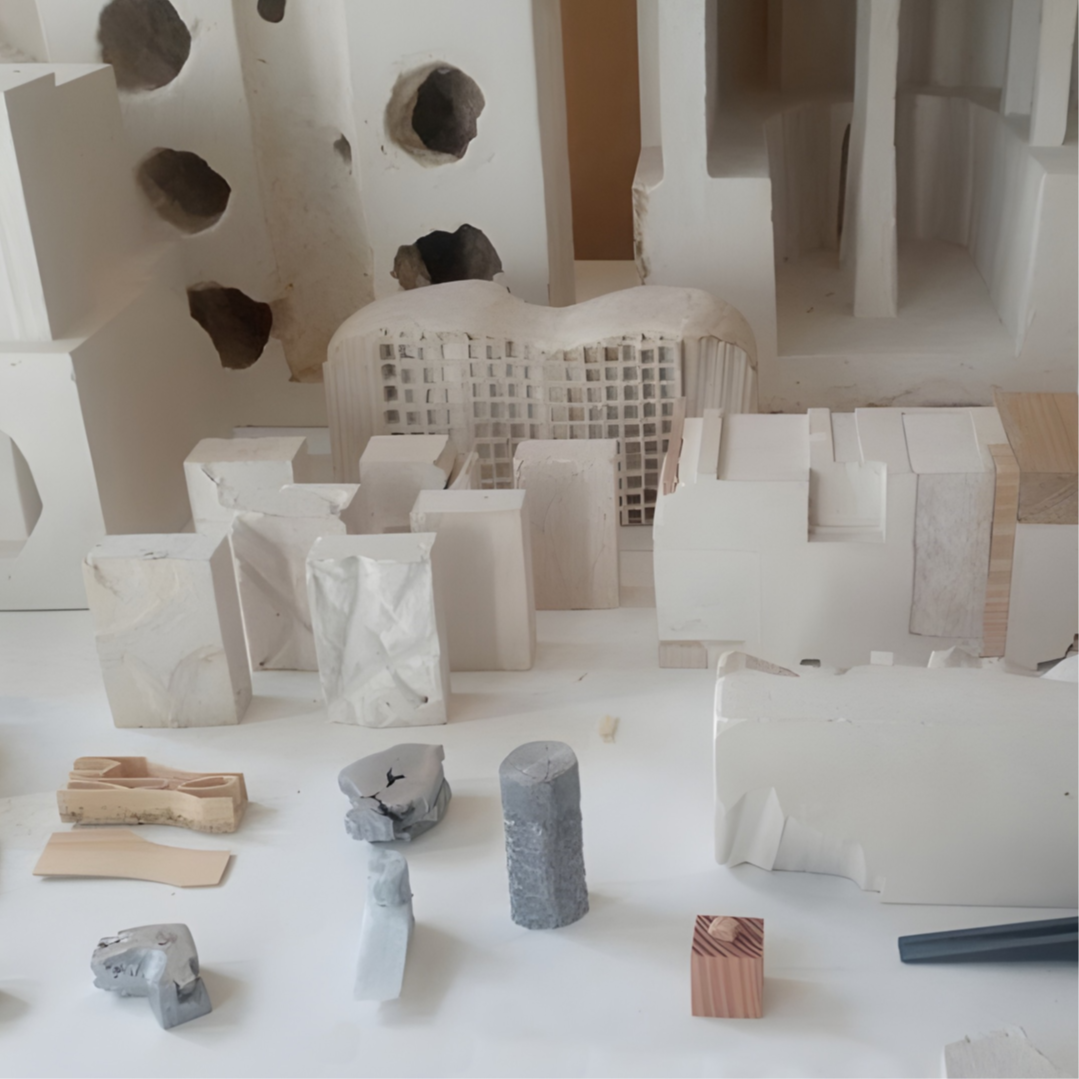
This article explores the knowledge-producing potential of exhibition practices in design education. Through the conceptualisation of five display principles – cosmos, series, table, milieu and staging – we explore how different types of spatial organisation can produce different types of knowledge about artefacts in an exhibition context. These display principles are initially conceptualised by drawing on museological theory on museum display and are then used for analysing four examples of exhibition practices within design teaching at the Royal Danish Academy – Architecture, Design, Conservation. Through these case analyses, the conceptualisations of the five display principles are further developed and their potential for investigating, advancing, and communicating design processes and outcomes within design education is discussed.
References
Aynsley, J. (2006). The modern period room – a contradiction in terms? In P. Sparke, B. Martin, & T. Keeble (Eds.), The modern period room: The construction of the exhibited interior 1870 to 1950 (pp. 8–30). Routledge.
Bennett, T. (1988). The exhibitionary complex. New Formations, 4, 73–102.
Bjerregaard, P. (Ed.). (2019). Exhibitions as research: Experimental methods in museums. Routledge. https://doi.org/10.4324/9781315627779
Bäckström, M. (2021). Att bygga innehåll med utställningar: utställningsproduktion som forskningsprocess [Building content with exhibitions: exhibition production as a research process]. Nordic Academic Press.
Etz, S., Marguin, S., & Rabe, H. (2024). Refiguring museums: Investigating tensions in exhibition spaces. Museum & Society, 22(1), 1–13. https://doi.org/10.29311/mas.v22i1.4563
Habsburg-Lothringen, B. (2015). From object to environment: The recent history of exhibitions in Germany and Austria. In M. Henning (Ed.), The international handbooks of museum studies: Museum media (pp. 327–347). Wiley & Sons. https://doi.org/10.1002/9781118829059.wbihms315
Hansen, M. F. (2009). Tilstandsskift og gennemgange: Gallerier, kabinetter og kunstkamre i 1500- og 1600-tallet. Passepartout, 14(28), 13–42.
Impey, O. R., & MacGregor, A. (Eds.) (1985). The origins of museums: The cabinet of curiosities in sixteenth- and seventeenth-century Europe. Clarendon Press.
Jönsson, L., Hansen, F. T., Mäkelä, M., & Ahde-Deal, P. (2013). Investigating design research landscapes through exhibition. In Proceedings of NODEM 2013 / International Conference on Design and Digital Heritage. Stockholm.
Kossmann, H., Mulder, S., & den Oudsten, F. (2012). Narrative spaces: On the art of exhibiting. 010 Publishers.
Loveday, D. (2022). Curating design. Bloomsbury Publishing. https://doi.org/10.5040/9781350162808
MacGregor, A. (2007). Curiosity and enlightenment: Collectors and collections from the sixteenth to the nineteenth century. Yale University Press.
Myzelev, A. (Ed.). (2017). Exhibiting craft and design: Transgressing the white cube paradigm, 1930–present. Routledge. https://doi.org/10.4324/9781315182353
Niedderer, K., Biggs, M., & Ferris, M. (2006). The research exhibition: Context interpretation and knowledge creation. In Proceedings of Wonderground - DRS International Conference 2006. Lisbon. https://doi.org/10.21606/drs.2006.45
Preziosi, D. (1996). The brain of the earth’s body: Museums and the framing of modernity. In P. Duro (Ed.), The rhetoric of the frame: Essays on the boundaries of the artwork (pp. 96–110). Cambridge University Press.
Schön, D. A. (1983). The reflective practitioner: How professionals think in action. Basic Books.
Tang, A., & Nakarada-Kordic, I. (2022). Unpacking notions of community: Critical design and exhibition as a creative participatory research method. The Design Journal, 26(1), 97–120. https://doi.org/10.1080/14606925.2022.2144493
Downloads
Published
How to Cite
Issue
Section
License
Copyright (c) 2026 Ane Pilegaard, Flemming Tvede Hansen

This work is licensed under a Creative Commons Attribution 4.0 International License.
Authors who publish with this journal agree to the following terms:
- Authors retain copyright and grant the journal right of first publication with the work simultaneously licensed under a Creative Commons Attribution 4.0 License that allows others to share the work with an acknowledgement of the work's authorship and initial publication in this journal.
- Authors are able to enter into separate, additional contractual arrangements for the non-exclusive distribution of the journal's published version of the work (e.g., post it to an institutional repository or publish it in a book), with an acknowledgement of its initial publication in this journal.
- Authors are permitted and encouraged to post their work online (e.g., in institutional repositories or on their website) prior to and during the submission process, as it can lead to productive exchanges, as well as earlier and greater citation of published work (See The Effect of Open Access).
- The author(s) must manage their economic reproduction rights to any third party.
- The journal makes no financial or other compensation for submissions, unless a separate agreement regarding this matter has been made with the author(s).
- The journal is obliged to archive the manuscript (including metadata) in its originally published digital form for at least a suitable amount of time in which the manuscript can be accessed via a long-term archive for digital material, such as in the Norwegian universities’ institutional archives within the framework of the NORA partnership.
The material will be published OpenAccess with a Creative Commons 4.0 License which allows anyone to read, share and adapt the content, even commercially under the licence terms:
This work needs to be appropriately attributed/credited, a link must be provided to the CC-BY 4.0 licence, and changes made need to be indicated in a reasonable manner, but not in any way that suggests that the licensor endorses you or your use.
Cited by