Actors, Spaces, and the Politics of Knowledge in Education Governance?
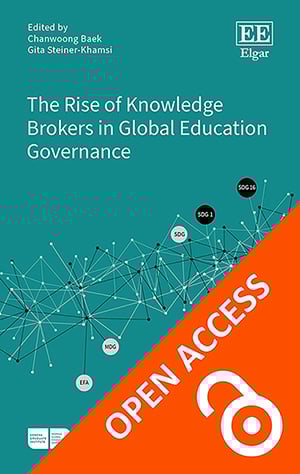
A Review of The Rise of Knowledge Brokers in Global Education Governance
DOI:
https://doi.org/10.7577/njcie.6443Keywords:
knowledge brokers, epistemic governance, knowledge equity, global education policy, epistemic justiceAbstract
This review critically examines The Rise of Knowledge Brokers in Global Education Governance, edited by Chanwoong Baek and Gita Steiner-Khamsi, which marks a paradigmatic shift from policy transfer toward epistemic governance in global education. The book reveals how knowledge brokers, including actors, institutions, and networks, not only transmit knowledge but also shape legitimacy, norms, and the direction of international education policy. Through a reflective reading of its conceptual and empirical contributions, this review highlights three central dimensions: actors, spaces, and the politics of knowledge. These dimensions help explain how learning outcomes are constructed, negotiated, and socially legitimized. The analysis demonstrates that the circulation of global knowledge occurs within asymmetrical epistemic power relations between the Global North and the Global South. By advancing the notions of knowledge equity and epistemic justice, Baek and Steiner-Khamsi propose a reflective framework for more equitable knowledge governance. This review underscores the book’s theoretical and practical contribution to understanding the relationship between knowledge and power, and it emphasizes the urgency of strengthening local knowledge brokers in Southeast Asia, particularly Indonesia, as a concrete expression of epistemic justice in education policy.
Downloads
References
Baek, C., & Steiner-Khamsi, G. (Eds.). (2023). The Rise of Knowledge Brokers in Global Education Governance. Edward Elgar Publishing. https://doi.org/10.4337/9781035326426 https://doi.org/10.4337/9781035326426
Clarke, K., & Vertelyté, M. (2023). Educational challenges for nordic exceptionalism: Epistemic injustice in the absence of antiracist education. In E. L. Engebretsen & M. Liinason (Eds.), Transforming identities in contemporary Europe: Critical Essays on Knowledge, Inequality and Belonging (pp. 33-50). Routledge. https://doi.org/10.4324/9781003245155-3
Cummings, S., Munthali, N., & Sittoni, T. (2025). Epistemic Justice as a “new normal?” Interrogating the contributions of communities of practice to decolonization of knowledge. Sustainable Development, 33(3), 3228–3245. https://doi.org/10.1002/sd.3285 https://doi.org/10.1002/sd.3285
Dragnić-Cindrić, D., & Fusco, J. (2025). LINC: Knowledge Mobilization Framework for Knowledge Brokers. In Proceedings of the 19th International Conference of the Learning Sciences (ICLS 2025) (pp. 2759–2761). International Society of the Learning Sciences. https://repository.isls.org/bitstream/1/11583/1/ICLS2025_2759-2761.pdf https://doi.org/10.22318/icls2025.120465
Fitrah, M., Setiawan, C., Widihastuti, Marinding, Y., & Herianto (2024). Evaluation of Digital Technology Management in Mathematics Learning: A Sequential Explanatory Design in Eastern Indonesia. Nordic Journal of Comparative and International Education (NJCIE), 8(3). https://doi.org/10.7577/njcie.5926 https://doi.org/10.7577/njcie.5926
Fitrah, M., Sofroniou, A., Yarmanetti, N., Ismail, I. H., Anggraini, H., Nissa, I. C., Widyaningrum, B., Khotijah, I., Kurniawan, P. D., & Setiawan, D. (2025). Are Teachers Ready to Adopt Deep Learning Pedagogy? The Role of Technology and 21st-Century Competencies Amid Educational Policy Reform. Education Sciences, 15(10). https://doi.org/10.3390/educsci15101344 https://doi.org/10.3390/educsci15101344
Gebremariam, E. B. (2025). Decentering Coloniality: Epistemic Justice, Development Studies and Structural Transformation. The European Journal of Development Research, 37(2), 442–453. https://doi.org/10.1057/s41287-024-00681-6 https://doi.org/10.1057/s41287-024-00681-6
Golhasany, H., & Harvey, B. (2025). Navigating barriers and pathways in capacity development for knowledge mobilization: perspectives from McGill University’s Faculty of Education. Frontiers in Education, 10. https://doi.org/10.3389/feduc.2025.1423832 https://doi.org/10.3389/feduc.2025.1423832
Kallo, J., & Välimaa, J. (2025). Higher education in Nordic countries: analyzing the construction of policy futures. Higher Education, 89, 275–292. https://doi.org/10.1007/s10734-024-01280-4 https://doi.org/10.1007/s10734-024-01280-4
Lundahl, L., Arnesen, A. L., & Jónasson, J. T. (2018). Justice and marketization of education in three Nordic countries: can existing large-scale datasets support comparisons? Nordic Journal of Studies in Educational Policy, 4(3), 120–132. https://doi.org/10.1080/20020317.2018.1542908 https://doi.org/10.1080/20020317.2018.1542908
Malin, J. R., & Brown, C. (Eds.). (2019). The Role of Knowledge Brokers in Education: Connecting the Dots Between Research and Practice. Routledge. https://doi.org/10.4324/9780429462436 https://doi.org/10.4324/9780429462436
Pino-Yancovic, M., Herrera, A., & Ortega, L. (2025). Good-functioning networks activities and knowledge mobilization in Chile’s new public education system. Journal of Professional Capital and Community. https://doi.org/10.1108/JPCC-10-2024-0175 https://doi.org/10.1108/JPCC-10-2024-0175
Richards, D. P., Chambers, C. T., Jordan, I., Strain, K., Fadaak, R., Tunnah, L., Gruenwoldt, E., & Birnie, K. A. (2025). Solutions for Kids in Pain: Embedding and actioning patient partnership in a national knowledge mobilization network. Research Involvement and Engagement, 11(1), 1–13. https://doi.org/10.1186/s40900-024-00663-2 https://doi.org/10.1186/s40900-024-00663-2
Sahlberg, P. (2021). Finnish lessons 3.0: What can the world learn from educational change in Finland? Teachers College Press.
Samuelsson, K., & Lindblad, S. (2015). School management, cultures of teaching and student outcomes: Comparing the cases of Finland and Sweden. Teaching and Teacher Education, 49, 168-177. https://doi.org/10.1016/j.tate.2015.02.014 https://doi.org/10.1016/j.tate.2015.02.014
Scott, J., & Bajaj, M. (Eds.). (2023). World Yearbook of Education 2023: Racialization and Educational Inequality in Global Perspective. Routledge. https://doi.org/10.4324/9781003169040 https://doi.org/10.4324/9781003241393
Telhaug, A. O., Mediås, O. A., & Aasen, P. (2006). The Nordic Model in Education: Education as part of the political system in the last 50 years. Scandinavian Journal of Educational Research, 50(3), 245–283. https://doi.org/10.1080/00313830600743274 https://doi.org/10.1080/00313830600743274
Viseu, S., Martins, E., & Carvalho, L. M. (2025). Education governance, philanthropy and knowledge brokering: The case of a digital education programme by a private foundation in Portugal. International Journal of Educational Development, 114. https://doi.org/10.1016/j.ijedudev.2025.103262 https://doi.org/10.1016/j.ijedudev.2025.103262
Published
How to Cite
Issue
Section
License
Copyright (c) 2025 Muh. Fitrah

This work is licensed under a Creative Commons Attribution 4.0 International License.
Declaration on copyright
- The author/s will keep their copyright and right of reproduction of their own manuscript, with the work simultaneously licensed under a Creative Commons Attribution License, but give the journal a permanent right to 1) present the manuscript to the public in the original form in which it was digitally published and 2) to be registered and cited as the first publication of the manuscript.
- The author itself must manage its financial reproduction rights in relation to any third-parties.
- The journal does not provide any financial or other remuneration for contributions submitted.
- Readers of the journal may print the manuscripts presented under the same conditions that apply to reproduction of a physical copy. This means that mass reproduction of physical copies or production of copies for commercial purposes is not permitted without the agreement of the author/s.


