Archives
-

Vol. 10 No. 1 (2026)
Thematic Issue: Diverse Perspectives on Decolonizing the Field of Comparative and International EducationTraditional research has centered on the subjugation of indigenous and marginalized people, and comparative and international education (CIE) research is no different. Interest in challenging the long-held structures within the field of CIE has increased over the past decades. A growing number of authors and researchers are interested in a critical approach towards their subjects and have sought to decenter colonial structures perpetuated within modernity. And yet, modern implications of coloniality persist in every field of research. For a paradigm shift to occur, (post)coloniality and racial capitalism must be interrogated from multiple perspectives, positionalities, and cultural contexts.
-

Vol. 10 No. 4 (2026)
Special Issue: Constructing and Comparing Learning Outcomes in Europe - Factors, actors, and spacesThis Special Issue seeks to contribute to the scholarly debates by examining how various factors, actors, and spaces enter the interplay of constructing learning outcomes, addressing questions such as: How do local/regional contexts and opportunity structures shape educational pathways? To what extent do various educational stakeholder groups connect to support learning processes? What is the role of spaces in ensuring just and accessible education? These themes are particularly interesting from an international and comparative perspective, as they shed light on the role of local and regional contexts in providing educational opportunities.
Guest editors: Marcelo Parreira do Amaral and Josef Zelinka, University of Münster
-

Vol. 9 No. 4 (2025)
Special issue - The Implementation of Educational Reforms and Changing Classroom PracticesThis special issue examines the implementation of recently introduced educational reforms in various contexts and their translation into classroom practices across different school subjects. By adopting a comparative perspective, we aim to unravel the nuanced and varied ways in which these reforms impact both teaching and learning across different subjects or grade levels, or within the same subject over time, comparing different reforms in the same or different geographical locations.
Guest editors: Gréta Björk Guðmundsdóttir (University of Oslo), Lisbeth M. Brevik (University of Oslo), Kaja Granum Skarpaas (Oslo Metropolitan University), Gerard Doetjes (Østfold University College/Norwegian National Centre for English and other Foreign Languages in Education), Peter Nicolai Aashamar (University of Oslo)
-

Vol. 9 No. 1 (2025)
Special issue: Power and majority discourses in education - critical perspectives / Makt og majoritetsdiskursar i utdanning – kritiske perspektivThis special issue highlights critical perspectives on power and majority discourses in education from both local, global, and comparative perspectives from the global South and the global North. Such new insight might contribute to a critical debate about education’s role in society, nationally and globally.
Dette spesialnummeret vektlegg kritiske perspektiv på makt og majoritetsdiskursar i utdanning, frå både lokale, globale og komparative perspektiv frå det globale sør til det globale nord. Ny innsikt på feltet kan bidra til ein kritisk debatt kring utdanning si rolle i samfunnet, nasjonalt og globalt.
Guest editors/gjesteredaktørar: Anne Grethe Sønsthagen & Ane Bergersen (Western Norway University of Applied Sciences/Høgskulen på Vestlandet)
-

Vol. 8 No. 4 (2024)
Special issue: Computational Thinking in Nordic Schools and Teacher EducationThis special issue focuses particularly on the Nordic countries to promote deeper understanding and new knowledge about these countries' specific approaches, and their implications. Furthermore, this issue points towards potential ways the Nordic countries can benefit from each other’s distinctive approaches by exploring the various aspects of locally and nationally situated educational computational thinking practices.
Guest editors: Mads M. Rehder (University College Copenhagen), Louise Mifsud (Oslo Metropolitan University), Kalle Juuti (University of Helsinki), Katarina Pajchel (Oslo Metropolitan University), Thomas Frågåt (Inland Norway University of Applied Sciences)
-
Vol. 8 No. 2 (2024)
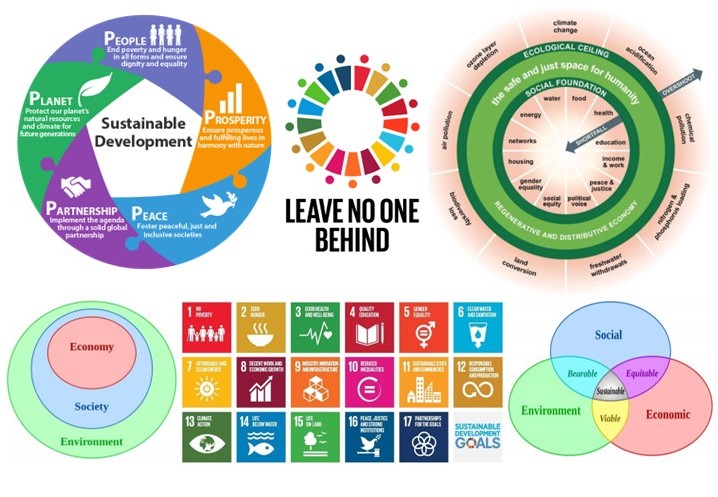
Special Issue: Interdisciplinary Approaches to Education for Sustainable DevelopmentThis special issue aims to explore the transformative potential that interdisciplinary approaches to ESD can achieve and how they can be effectively implemented. The goal of the special issue is to collect and share new research and innovations in the emerging field of interdisciplinary education for sustainable development.
Guest editors: Robert J. Didham (Inland Norway University of Applied Sciences), Hiroki Fujii (Okayama University), and Gregor Torkar (University of Ljubljana)
-

Vol. 7 No. 4 (2023)
Special Issue: Interactions Between the Education Sector and AcademiaHow can interactions between the education sector and academia create knowledge that addresses key societal challenges? What opportunities for innovation do Ph.D./Ed.D./professional doctorate (PD) programmes for education practitioners and the education sector create? How are interactions between the education section and academia experienced by those involved, both in the Nordic region and internationally?
Guest editors: Erlend Dehlin and Mari Ana Jones (Norwegian University of Science and Technology), Tessa E. Grevle (Oslo Metropolitan University), Tony Burner (University of South-Eastern Norway), Sara Bubb (University College London)
-

Vol. 7 No. 1 (2023)
General issueWelcome to the 7th year of the journal.
-

Vol. 6 No. 3-4 (2022)
Special Issue: Inclusion in vocational education and training (VET)One of the main aims of vocational education and training (VET) is to provide access to skilled employment and to supply the labour market with a skilled workforce. At the same time, VET is also required to provide equitable and inclusive quality education for young people from different educational and social backgrounds. In this special issue, we consider measures, offers and programmes as “inclusive” if they are part of the regular VET system or if they intend to prepare young people for a regular VET trajectory.
-
Vol. 6 No. 2 (2022)
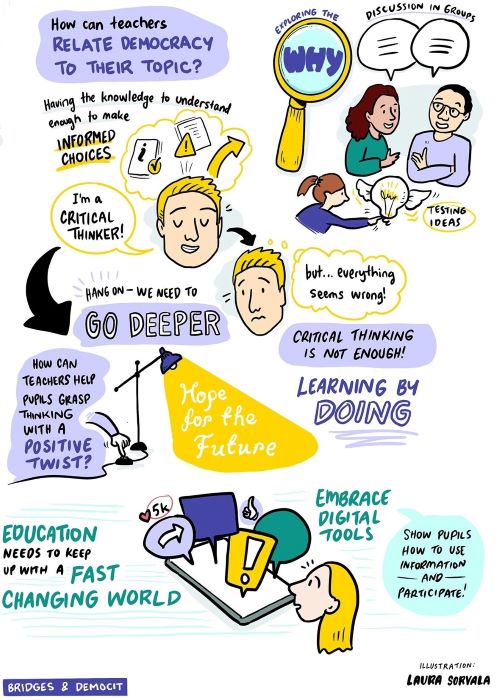
Special Issue: Illuminating Citizenship Education Toward the 21st CenturyGuest editors: Heidi Biseth, Sigrun W. Svenkerud, and Andrea Hofmann
-

Vol. 5 No. 4 (2021)
Special Issue: Digital Competence in Teacher Education across EuropeGuest editors: Tonje H. Giæver, Adrian McDonagh, Louise Mifsud, Josephine Milton
This special issue focuses on the increasingly important concern of digital competence in initial teacher education and examines the range of digital competencies required by educators in a rapidly evolving digital context. Teacher education plays a critical role in preparing teachers to integrate digital technologies in teaching and learning and needs to equip teachers with the skills to adapt to changing technologies and curricula in the future.
-

Vol. 5 No. 3 (2021)
Special issue: Scientization of International Educational Development Programs in the Global South - Opportunities and ChallengesGuest editor: Teklu Abate Bekele
This special issues explores the scientization of global educational governance linked to educational policymaking and practice. It examines how and to what extent international organizations (IOs) consider scientization as a powerful tool for impact and legitimacy. The units of analysis include the policies, strategic plans, programs, projects, publications, and official reports of intergovernmental and non-governmental IOs.
-

Vol. 5 No. 2 (2021)
Special Issue: New Perspectives on Asian Educational PhilosophiesGuest Editor: David Gabriel Hebert (Western Norway University of Applied Sciences)
The articles in this special issue on “New Perspectives on Asian Educational Philosophies” offer a comparative perspective to explain the educational philosophies of notable Asian thinkers who tend to be little recognized in Europe. Arguments associated with decolonization offer one timely rationale for our work, but our purpose with this special issue is not so much about convincing readers that change is necessary, but rather to offer specific resources for diversification of higher education curricula. We assume that as years pass, educators will increasingly seek to know more about educational thought from across the world. In order to attain cohesion and engender a comparative perspective, each of the authors in this special issue connects in some way with the contemporary European notion of Bildung within their articles.
-

Vol. 4 No. 3-4 (2020)
Special Issue: Perspectives on teachers’ transdisciplinary professional competenceGuest editors: Bjørn Smestad, Monica Johannesen, and Hanne Christensen
What are the prevalent understandings of the concept of teachers' professional competence? What knowledge forms and learning arenas are significant in developing teacher competences for the 21st century? In what ways can transdisciplinary goals of teacher education, such as diversity, R&D, and digital competence, contribute in forming teachers' professional competence? This special issue's contributions address a variety of perspectives on core concepts for understanding the complexity of teachers' professional competence.











1-25 of 35
Next


