Powerful Learning in Compact Packages
Impact of a Short Blended Intensive Program on Police Students
DOI:
https://doi.org/10.7577/njcie.6642Nyckelord:
Community of Inquiry, Transformative learning, Experiential learning, Short-term exchanges, Police educationAbstract
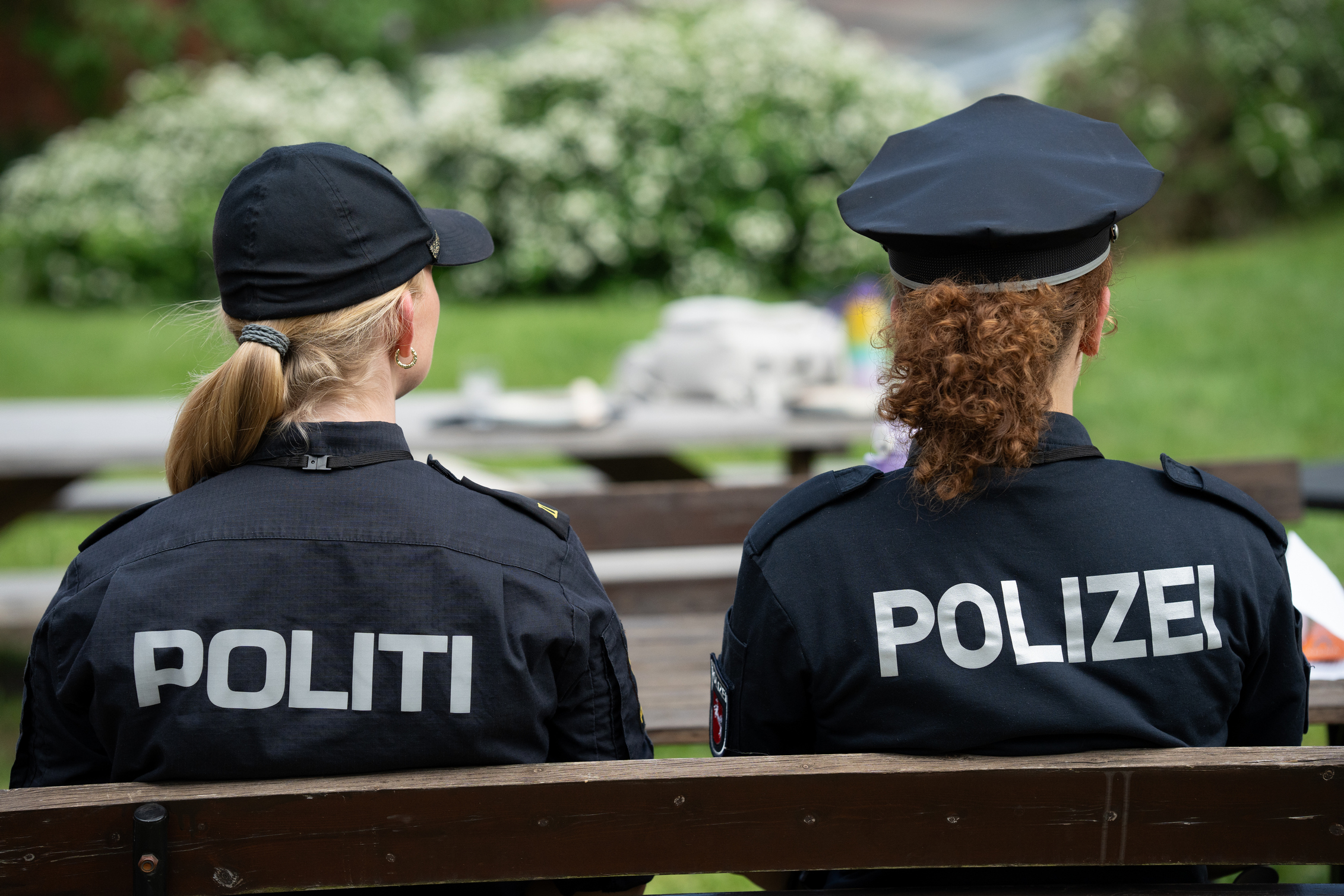
This empirical study examines the effectiveness of learning in a short-term, cross-cultural operative communication training course for police students from five northern European countries. The in-person course is strongly experiential, with a mix of theory and practice. It is based on the Community of Inquiry framework, which is focused on social, cognitive and teaching aspects in collaborative (usually digital) learning environments. Some of the practical scenarios employ professional actors. Reflexivity is a central element; this is aided by the use of body-cameras and mobile phone video footage in practical scenarios. The study uses data from questionnaires (three student cohorts, 75 responses) and focus groups (one cohort, five focus groups). Evaluation of the course suggests the presence of transformational learning, which was surprising given that prior research has tended to focus on longer-term programs. This paper does two things: it introduces the course as a best-practice example in vocational training, and it makes a theoretical contribution by suggesting that a short training course informed by Community of Inquiry principles can lead to transformative learning.
Nedladdningar
Referenser
Anastasiadis, S., & O’Brien, J. (2019). An exploration of taught master’s student perceptions of UK dissertation supervision. Journal of Learning Development in Higher Education, 16. https://doi.org/10.47408/jldhe.v0i16.490
Anastasiadis, S., Perkiss, S., Dean, B. A., Bayerlein, L., Gonzalez-Perez, M. A., Wersun, A., Acosta, P., Jun, H., & Gibbons, B. (2020). Teaching sustainability: complexity and compromises. Journal of Applied Research in Higher Education, 13(1), 272-286. https://doi.org/10.1108/JARHE-02-2020-0029
Ariati, J., Pham, T., & Vogler, S. (2023). Constructivist learning environments: Validating the community of inquiry survey for face-to-face contexts. Active Learning in Higher Education, 26(1), 41-57. https://doi.org/10.1177/14697874231183642
Bauman, Z. (2012). Liquid modernity. Polity Press.
Billsberry, J. (2014). The rise and rise of management edutainment. Journal of Management Education, 38(2), 151–159. https://doi.org/10.1177/1052562914524696
Braun, V. & Clarke, V. (2019). Reflecting on reflexive thematic analysis. Qualitative Research in Sport, Exercise and Health, 11(4), 589-597. https://doi.org/10.1080/2159676x.2019.1628806
Breton, H. (2018). Vers une relecture herméneutique et biographique de la théorie de l’apprentissage transformateur. Phronesis, 7(3), 35-42. https://doi.org/10.7202/1054407ar
Brunsson, N. (2002). The organization of hypocrisy: Talk, decisions and actions in organizations (2nd ed.) (N. Adler, translator). Abstrakt forlag.
Canales, R., Santini, J. F., González Magaña, M., & Cherem, A. (2025). Shaping police officer mindsets and behaviors: Experimental evidence of Procedural Justice training. Management Science, 71(11), 8995-9013. https://doi.org/10.1287/mnsc.2022.03243
Clark, L., Birkhead, A. S., Fernandez, C., & Egger, M. J. (2017). A transcription and translation protocol for sensitive cross-cultural team research. Qualitative Health Research, 27(12), 1751-1764. https://doi.org/10.1177/1049732317726761
Clark, T., Foster, L., Sloan, L., & Bryman, A. (2021). Social research methods. Oxford University Press.
Coker, J. S., Heiser, E., & Taylor, L. (2018). Student outcomes associated with short-term and semester study abroad programs. Frontiers: The interdisciplinary journal of study abroad, 30(2), 92-105. https://doi.org/10.36366/frontiers.v30i2.414
Community of Inquiry. (n.d.). https://www.thecommunityofinquiry.org/framework (accessed 02 January 2025).
Dempsey, P. R. (2017). The relationship between a community of inquiry and transformative learning [Doctoral dissertation]. Liberty University. https://digitalcommons.liberty.edu/doctoral/1473/
DeSapio, J (2017). Transformational Learning: A literature review of recent criticism. Journal of Transformative Learning, 4(2), 56-63.
ErasmusPluss. (2024). Hva er en BIP og hvordan lykkes med gjennomføringen? https://erasmuspluss.no/prosjekteksempler/hva-er-en-bip-og-hvordan-lykkes-med-gjennomforingen (accessed 10 September 2025).
Donner, C., Maskaly, J., Fridell, L., & Jennings, W.G. (2015). Policing and procedural justice: a state-of-the-art review. Policing: An International Journal, 38(1), 153-172. https://doi.org/10.1108/PIJPSM-12-2014-0129
Dwyer, M. (2004). More is better: The impact of study abroad program duration. Frontiers: The Interdisciplinary Journal of Study Abroad, 10(1), 151-164. https://doi.org/10.36366/frontiers.v10i1.139
Friedman, J. (2022). How a new learning theory can benefit transformative learning research: Empirical hypotheses. Frontiers in Education, 7. https://doi.org/10.3389/feduc.2022.857091
Garrison, R., Anderson, T., & Archer, W. (2000). Critical inquiry in a text-based environment: computer conferencing in higher education. Internet and Higher Education, 2(2-3), 87-105. https://doi.org/10.1016/S1096-7516(00)00016-6
Garrison, R. (2023). CoI Framework in Face-to-Face Environments. https://www.thecommunityofinquiry.org/editorial42 (accessed 14 December 2025)
Gundhus, H. I. (2013). Experience or knowledge? Perspectives on new knowledge regimes and control of police professionalism. Policing: A Journal of Policy and Practice, 7(2), 178-194. https://doi.org/10.1093/police/pas039
Gupta, A., Brooks, R., Abrahams, J. (2025). Higher education students as consumers: a cross-country comparative analysis of students’ views. Compare: A Journal of Comparative and International Education, 55(2), 174-191. https://doi.org/10.1080/03057925.2023.2234283
Hoggan, C. D. (2015). Transformative Learning as a metatheory. Adult Education Quarterly, 66(1), 57-75. https://doi.org/10.1177/0741713615611216
Howie, P., & Bagnall, R. (2013). A beautiful metaphor: Transformative learning theory. International Journal of Lifelong Education, 32(6), 816-836. https://doi.org/10.1080/02601370.2013.817486
Jonathan-Zamir, T., Litmanovitz, Y., & Haviv, N. (2022). What works in police training? Applying an evidence-informed, general, ecological model of police training. Police Quarterly, 26(3), 279–306. https://doi.org/10.1177/10986111221113975
King, P. (2009). Handbook of the evolving research of Transformative Learning. Information Age Publishing.
Liu, W., Wang, J., Zhang, H., Yu, C., Zhang, Liu, S., Shang, C., Yu, J., Liu, Q., & Yang, B. (2021). Determining the effects of blended learning using the community of inquiry on nursing students' learning gains in sudden patient deterioration module. Nursing Open, 8(6), 3635-3644. https://doi.org/10.1002/nop2.914
Luxton, I., Valdes-Vasquez, R., Ozbek, M., & Thornes, L. (2022). High impact learning in a short-term study abroad program. Frontiers: The Interdisciplinary Journal of Study Abroad, 34(1), 97-130. https://doi.org/10.36366/frontiers.v34i1.541
McClain, A. L. (2024). New developments in Transformative Learning. New directions for adult and continuing education, 2024(104), 20-29. https://doi.org/10.1002/ace.20540
Meyerson D., Weick, K. E., & Kramer, R. M. (1996). Swift trust and temporary groups. In R. Kramer & T. Tyler (Eds.), Trust in organizations: Frontiers of theory and research (pp. 166-195). Sage.
Mezirow, J. (1985). A critical theory of self-directed learning. In S. Brookfield (Ed.), Self-directed learning from theory to practice (pp. 17-30). Jossey-Bass.
Mezirow, J. (2003). Transformative Learning as discourse. Journal of Transformative Education, 1(1), 58-63. https://doi.org/10.1177/1541344603252172
Mezirow, J. (2018). Transformative learning theory. In K. Illeris (Ed.), Contemporary theories of learning: Learning theorists…In their own words (pp. 114-128) (2nd ed.). Routledge.
Naftulin, D. H., Ware, J. E. J., & Donnelly, F. A. (1973). The Doctor Fox lecture: A paradigm of educational seduction. Journal of Medical Education, 48(7), 630–635.
Piaget, J. (1970). Science of education and the psychology of the child. Orion Press.
Pirrie, A., & Day, S. (2019). Reflective practice and student satisfaction: Never the twain shall meet? European Educational Research Journal, 18(4), 483-496. https://doi.org/10.1177/1474904118804423
Rantalo, O., Karp, S., Ghazinour, M., & Lauritz, L.-E. (2015). Hur utvecklas nya polisers reflexiva förmågor under yrkessocialisation? - en agenda för framtida forskning. In R. Granér & O. Kronkvist (Eds.), The past the present and the future of police research. Proceedings from the fifth Nordic Police Research Seminar (pp. 171-184). Linnaeus University.
Rosa, H. (2020). Unverfügbarkeit. Suhrkamp Verlag.
Schilke, O. & Huang, L. (2018). Worthy of swift trust? How brief interpersonal contact affects trust accuracy. Journal of Applied Psychology, 103(11), 1181-1197. https://doi.org/10.1037/apl0000321
Spiggle, S. (1994). Analysis and interpretation of qualitative data in consumer research. Journal of Consumer Research. 21(3), 491-503.
Stenbom, S, (2018), A systematic review of the Community of Inquiry survey. Internet and Higher Education, 39, 22-32. https://doi.org/10.1016/j.iheduc.2018.06.001
Ter Wal, A. L. J., Little, L. M., Grimes, M. G., & Roberson, Q. (2026). Loosening the theoretical reins: A case for phenomenon-driven research in AMJ. Academy of Management Journal, 69(3), 441–454. https://doi.org/10.5465/amj.2026.4003
Tran, L. T., Phan, H. L. T., Bellgrove, A. (2024). Knowing, acting and becoming: Australian students’ curriculum-specific learning through a new Colombo Plan short-term mobility program to Japan. Educational Review, 76(4), 876-893. https://doi.org/10.1080/00131911.2022.2069678
Tsang, E. W. K. (2022). Alternative typologies of case study theorizing: Causal explanation versus theory development as a classification dimension. Journal of International Business Studies, 53(1), 53-63. https://doi.org/10.1057/s41267-021-00477-4
Wenger, E. (1998). Communities of practice: Learning, meaning and identity. Cambridge University Press.
Vygotsky, L. S. (1986). Thought and Language. MIT Press.
Zhu, Y., Askary, M., Olatunji, T. I., & Qiu, R. (2023, October 1-3). Mapping the Development of Transformative Learning Theory across Continents: A Literature Review [Conference presentation]. American Association for Adult and Continuing Education (AAACE) - Commission for International Adult Education (CIAE).
Zou, J. & Zhang, S. (2022). Using student feedback to analyze the characteristics of presence in classroom settings based on the Community of Inquiry framework. Sustainability, 14(10). https://doi.org/10.3390/su14106103
##submission.downloads##
Publicerad
Referera så här
Nummer
Sektion
Licens
Copyright (c) 2026 Stephanos Anastasiadis, Suzanne Bancel, Jasper M. Erkens

Det här verket är licensierat under en Creative Commons Erkännande 4.0 Internationell-licens.
Declaration on copyright
- The author/s will keep their copyright and right of reproduction of their own manuscript, with the work simultaneously licensed under a Creative Commons Attribution License, but give the journal a permanent right to 1) present the manuscript to the public in the original form in which it was digitally published and 2) to be registered and cited as the first publication of the manuscript.
- The author itself must manage its financial reproduction rights in relation to any third-parties.
- The journal does not provide any financial or other remuneration for contributions submitted.
- Readers of the journal may print the manuscripts presented under the same conditions that apply to reproduction of a physical copy. This means that mass reproduction of physical copies or production of copies for commercial purposes is not permitted without the agreement of the author/s.


